
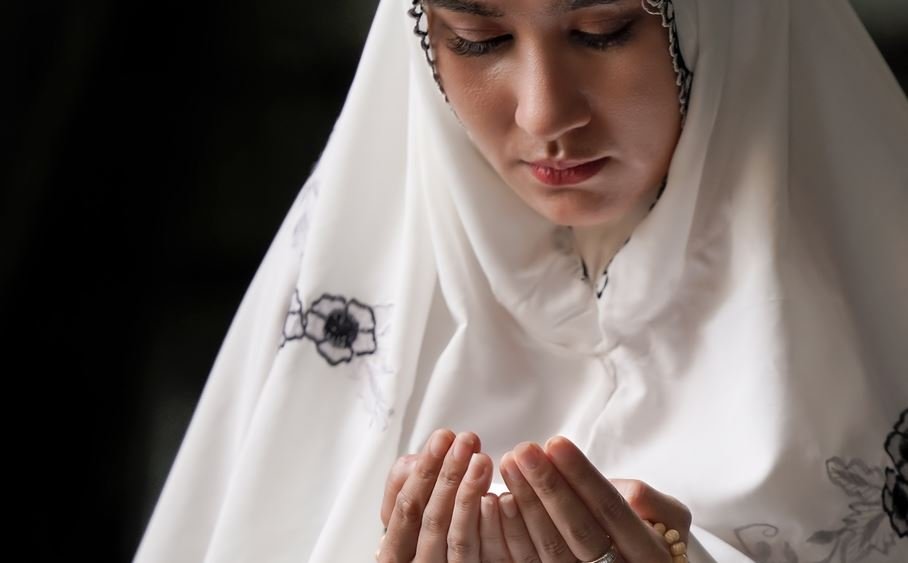
In this post, you will learn about the spiritual practice (wazifa) of Ayat al-Karimah, its historical background, and the blessings and benefits that many believers have experienced through its recitation. This blessed verse appears in verse 87 of The Qur’an, in Surah Al-Anbiya, which is located in Para 17 of the Qur’an.
Prophet Yunus (peace be upon him) was one of the noble Prophets of Allah, sent to guide the people of Nineveh. Nineveh was a great settlement located near present-day Mosul in Iraq. The people living there had become deeply involved in idol worship, disobedience, and sinful behaviour. For this reason, Allah sent Prophet Yunus (peace be upon him) to call them towards the worship of One God and the path of righteousness.
In the Qur’an, Prophet Yunus (peace be upon him) is also referred to as Dhun-Nun. According to historical estimates, he appeared nearly 1,400 years before the blessed arrival of Prophet Muhammad (peace be upon him). Some narrations mention that he spent between 30 and 40 years inviting his people towards faith and the worship of Allah alone, but most of them continued to reject his message.
When the majority of the people still refused to believe, Prophet Yunus (peace be upon him) became deeply saddened and left the town before receiving Allah’s final command. As he travelled, he reached the seashore where a ship was preparing to depart, and he boarded it.
At first, the journey seemed peaceful, but soon afterwards, a violent storm struck the sea. Powerful waves began crashing against the ship, and it came close to sinking. The people aboard believed the ship had become too heavy, so according to their custom, they decided to cast lots so that one person could be thrown overboard to save the others.
When the lots were drawn, the name of Prophet Yunus (peace be upon him) appeared. Seeing him as a righteous and honourable man, the passengers repeated the draw, yet his name appeared again a second and third time. Prophet Yunus (peace be upon him) realised that this was a decision from Allah, so he willingly cast himself into the sea.
As soon as he entered the water, by the command of Allah, a great fish swallowed him. However, Allah commanded the fish not to harm him in any way. In this miraculous state, Prophet Yunus (peace be upon him) remained alive inside the belly of the fish for forty days. Some narrations mention three days, while others mention seven.
According to hadith narrations, while inside the darkness of the fish’s belly, Prophet Yunus (peace be upon him) admitted his mistake before Allah and repeatedly recited the supplication:
“La ilaha illa anta subhanaka inni kuntu minaz zalimin”
This blessed prayer later became famously known as Ayat al-Karimah. By the blessing of this supplication, Allah accepted his repentance, and the fish released him safely onto the shore. Afterwards, Allah sent him once again to the same people, and this time his nation accepted faith.
This blessed supplication appears only once in the Qur’an, while Prophet Yunus (peace be upon him) is mentioned in approximately six different surahs, with various parts of his story appearing throughout several verses.
The meaning of this prayer teaches a believer humility, repentance, glorifying Allah, and admitting one’s mistakes. Spiritually, Ayat al-Karimah is widely regarded as a powerful supplication for relief from hardship, illness, financial difficulties, emotional stress, fear, family problems, harmful influences, and many other forms of distress. According to many scholars, regularly reciting this supplication brings peace to the heart, tranquillity to the soul, and ease into one’s life.
One of the unique beauties of Ayat al-Karimah is that it combines Tawheed (belief in the Oneness of Allah), Tasbeeh (glorifying Allah), and Tawbah (repentance) all within a single Dua. Because of this, it is considered by many to be a deeply powerful means for the acceptance of supplications.
Since our topic is to explain the benefits of the Ayate Karima and its virtues, this post has also told you about the special wazifas of the Ayate Karima and the benefits of these wazifas that have been observed.
Ayat e Karima in Arabic

Ayat e Karima in English
La ilaha illa Anta, Subhanaka, Inni Kuntu Minaz-Zalimin
Ayat e Karima Meaning
“There is no god except You. Glory be to You. Indeed, I have been among the wrongdoers.”
Ayat e Karima Wazifa for Hard Times
Ayat e Karima is often regarded as a powerful supplication for difficult times, and many pious elders have recited it as a spiritual practice(wazifa) for relief from hardships and worries. Therefore, after completing one’s obligatory and essential acts of worship, if a Muslim brother or sister wishes to recite Ayat e Karima regularly as a personal spiritual routine, there is no harm in doing so. In fact, it may become a means of blessings, goodness, and spiritual comfort.
Since Ayat e Karima itself is a supplication, its benefits can reach a believer both in this world and in the Hereafter. If a Muslim is passing through a difficult period in life, then reciting Ayat e Karima may become a means of seeking Allah’s help and mercy during that time.
In earlier generations, many Muslim elders shared different spiritual practices connected to Ayat e Karima based on their personal experiences and observations. Among these, one well-known practice (wazifa) is mentioned below.
This spiritual routine (wazifa) may be recited for quick relief from all kinds of worries, hardships, and difficulties.
For this practice, on Friday after the Isha prayer, begin by reciting 10 salutations upon the Prophet صلی اللہ علیہ وسلم.
After this, offer two voluntary units of prayer, and in each unit recite Surah Al-Ikhlas three times after Surah Al-Fatiha.
Once the voluntary prayers are completed, recite Surah Al-Mulk once, followed by 313 recitations of Ayat e Karima with love, sincerity, and full attention.
(The Arabic words of Ayat e Karima are written above, while Surah Al-Mulk is found in the 29th para of the Qur’an.)
At the end, recite 10 salutations upon the Prophet صلی اللہ علیہ وسلم once again to complete the practice (wazifa).
This spiritual routine (wazifa) should only be performed after the Isha prayer and continued for 14 days.
After these 14 days, whenever you find time, make it a habit to recite 10 salutations upon the Prophet صلی اللہ علیہ وسلم and 10 recitations of Ayat e Karima daily. By the mercy of Allah, the means of relief and ease from hardships may soon begin to appear.
It should be remembered that these spiritual practices (wazifa) are based on the experiences of some righteous people and should not be considered a specifically prescribed Sunnah act established directly from the Prophet صلی اللہ علیہ وسلم. The true effect and benefit always come only through the will and mercy of Allah.
Ayat e Karima Wazifa Benefits
We have shared a special wazifa (spiritual practice) for the Dua Ayat e Karima. This wazifa is presented based on the observations of saints, and now we will tell you about the apparent and spiritual benefits of this Ayat e Karima that have been observed, which are:
By the blessing of the prescribed wazifa of this Holy Verse (Ayat e karima), you may soon get relief from financial constraints, debt, and domestic problems.
Reciting this Holy Verse is a means of forgiveness of sins for a Muslim.
By the blessing of this Holy Verse, a Muslim’s prayers may be accepted quickly.
This Holy Verse is also considered a prayer for healing; therefore, for quick recovery from illness, reciting this Holy Verse is considered excellent.
If childless sisters recite Ayat e Karima along with medical treatment, happiness may come into their lives.
Recitation of Ayat e Karima for the protection of pregnancy has been practiced since ancient times.
This Holy Verse is a special prayer for relief from difficult times.
Reciting this Holy Verse a few times for relief from depression and anxiety begins to bring peace.
Success is not possible without the help of Allah, and the Ayat e Karima is the best Dua to seek Allah’s help.
Ayat e Karima is also considered a prayer for protection; therefore, reciting this Holy Verse for protection from enemies, Satan, and negative effects has been practiced since ancient times.
Many parents recite this Holy Verse for the early marriage of their daughters.
To remove obstacles in marriage, reciting this Holy Verse is excellent.
To remove the doubts, misunderstandings, and hatred between husband and wife, reciting Ayat e Karima is excellent.
By the blessing of Ayat e Karima, a Muslim can achieve success in a job interview.
By the blessing of Ayat e Karima, you can achieve success in your business.
Ayat e Karima How Many Times
Many Muslim brothers and sisters often ask how many times Ayat e Karima should be recited and for how many days it should be continued.
The reality is that the hadith literature does not clearly specify an exact number of recitations or a fixed number of days for reading Ayat e Karima. However, some pious elders and scholars, based on their personal experiences and observations, have mentioned different recitation counts in various spiritual books.
It is essential to remember that if a Muslim understands the meaning of Ayat e Karima and recites it with sincerity, certainty, and love for Allah, then, by Allah’s mercy, their difficulties may begin to ease. At the same time, many people are not fully aware of the deeper meaning of this blessed verse, nor do they yet have complete spiritual conviction in its effect. For this reason, some elders recommended reciting Ayat e Karima in specific numbers over several days, so that its meaning settles deeply into the heart and mind, strengthening a person’s belief that true help in times of hardship comes only from Allah Almighty.
It is this conviction that develops patience, consistency, and the inner strength needed to face life’s challenges. In reality, this itself is one of the forms of Allah’s help.
It should also be remembered that the true foundation for the acceptance of any supplication is sincerity, love, and firm trust in Allah. A spiritual routine or wazifa is simply a method in which certain prayers are repeated in set numbers to help a person build focus, certainty, and a stronger spiritual connection with Allah.
Because of this, some elders recommended reciting Ayat e Karima 313 times, while others mentioned 100 times, and some advised 1000 or 1100 recitations.
However, it is important to understand that reciting Ayat e Karima in large numbers is not, by itself, a guarantee that prayers will be accepted. The real means of acceptance is a person’s faith, sincerity, love, and trust in Allah. The tradition of wazifa was adopted mainly as a way of strengthening these spiritual qualities, and it remains a voluntary devotional practice performed after one’s obligatory acts of worship.